The Montessori Difference:
Research, Quality, and Impact
What the Research Says: Montessori Outcomes
-
![]()
Social Development
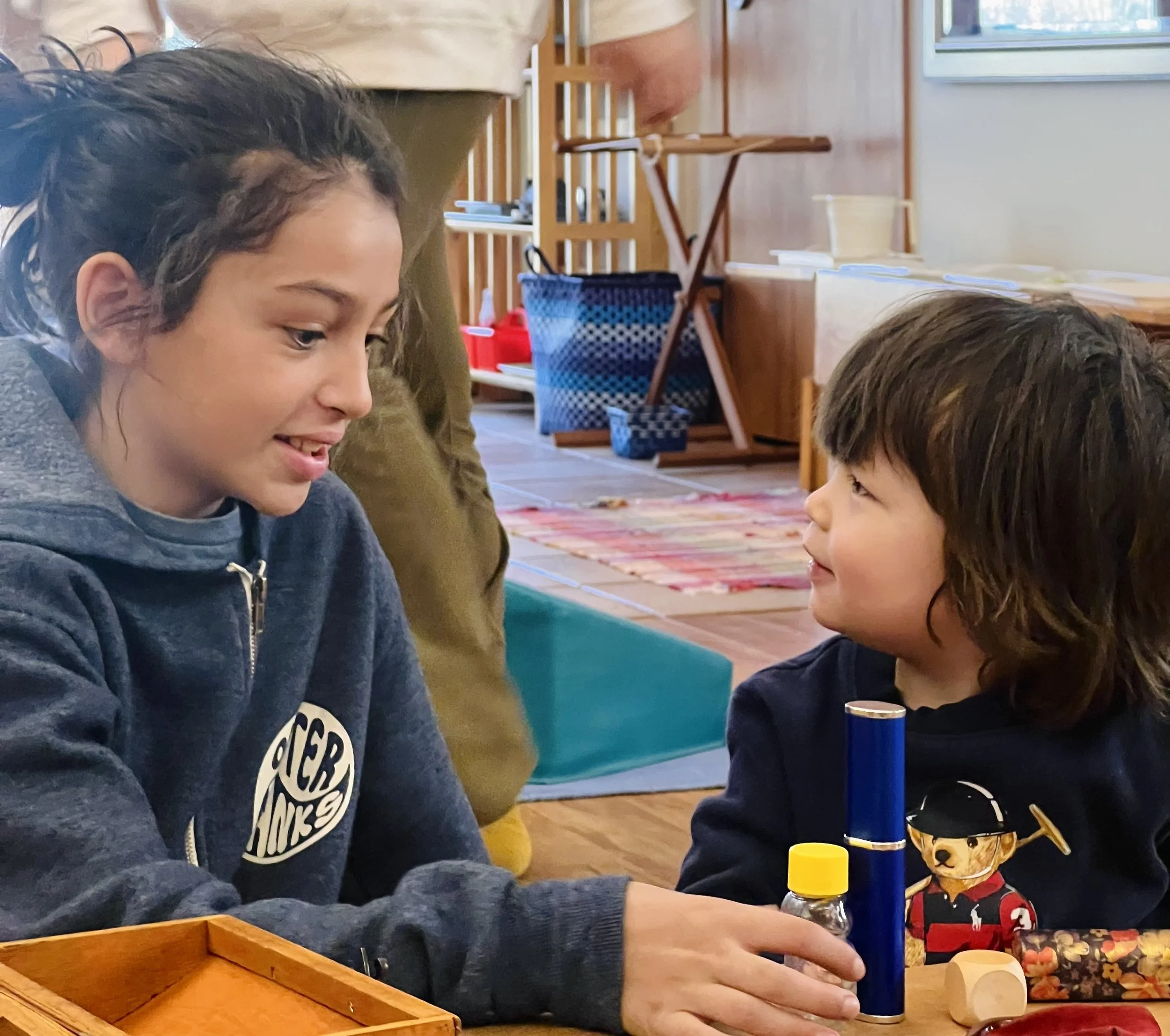
Students in Montessori classrooms demonstrate stronger social problem-solving skills, a deeper sense of community and social justice, and more positive peer relationships. Long-term findings show that Montessori students outperform peers on academic and behavioral measures, produce more sophisticated and creative work, and exhibit stronger social skills.
-
![]()
General Academic Achievement
As they age, Montessori students report greater intrinsic motivation, more frequent experiences of flow, and more positive emotional engagement with schoolwork compared to peers in traditional settings. They also spend more time on academic tasks, engage more actively in learning, and report more positive perceptions of their schools, teachers, and classmates.
-
![]()
Executive Functions
Research consistently shows that children in Montessori classrooms demonstrate stronger executive function skills, including self-regulation, working memory, planning, and inhibitory control. These strengths are associated with higher academic achievement and more consistent growth over time than peers in non-Montessori settings.
-
![]()
Language
Montessori students demonstrate strong literacy development, including phonological decoding, letter-word identification, reading performance, sentence structure, and writing creativity. Montessori experience is consistently associated with greater gains in reading, mathematics, vocabulary, executive function, and social problem-solving than conventional programs.
-
![]()
Mathematics
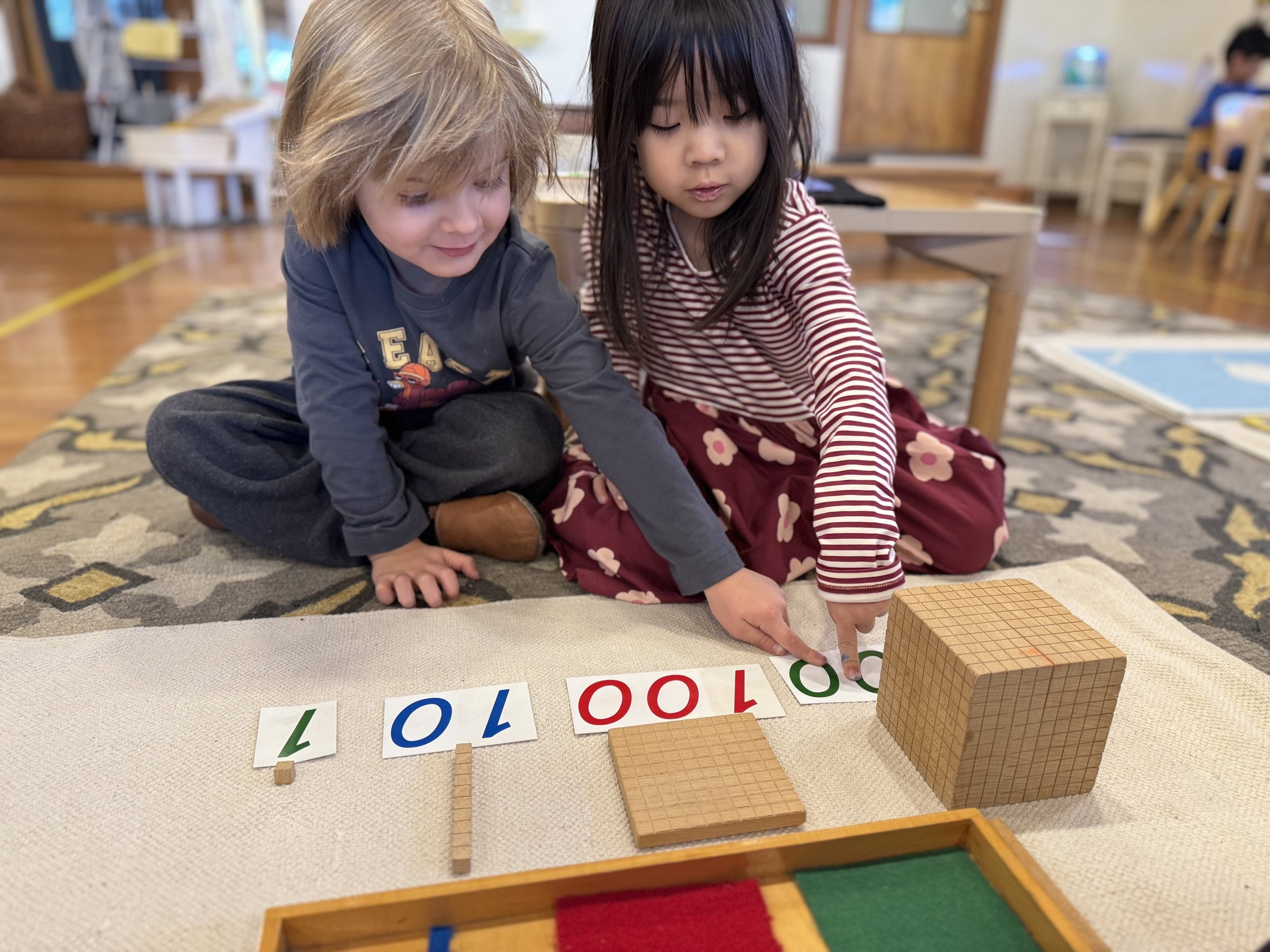
Montessori students demonstrate stronger applied problem-solving skills, deeper conceptual understanding of mathematics, and higher standardized test scores in mathematics and science over time. Research shows that attending Montessori from early childhood through elementary predicts significantly higher high school math and science performance. Research also indicates stronger conceptual thinking in mathematics, improved confidence and attitudes toward mathematics, and positive long-term outcomes, such as higher graduation and college attendance rates.
-
![]()
Science
Students who attended Montessori programs achieved significantly higher standardized test scores in mathematics and science in high school than their peers in non-Montessori programs. Evidence also suggests that sustained Montessori education in early and elementary years predicts stronger long-term achievement in STEM subjects.
-
![]()
School Readiness
Montessori early childhood students demonstrate substantial gains in school readiness skills, including phonological decoding, letter-word identification, and early math skills. Montessori implementation is associated with stronger gains in executive function, literacy, math, vocabulary, and social problem-solving. Long-term findings also indicate higher academic and behavioral performance, greater creative writing, and stronger social development than peers in conventional programs.







What to Look For: Indicators of a High-Quality Montessori Program
-
Multi-Aged Grouping
Students are organized into intentional, multi-aged groupings that reflect developmental stages, including 2.5/3–6, 6–9, 9–12, 12–15, and 15–18. All learning environments follow these age groupings, with larger class sizes and higher adult-to-child ratios aligned with Montessori principles to support independence, peer learning, and child-directed work. Children from birth to age three may be placed in varying, mixed-age groupings.
-
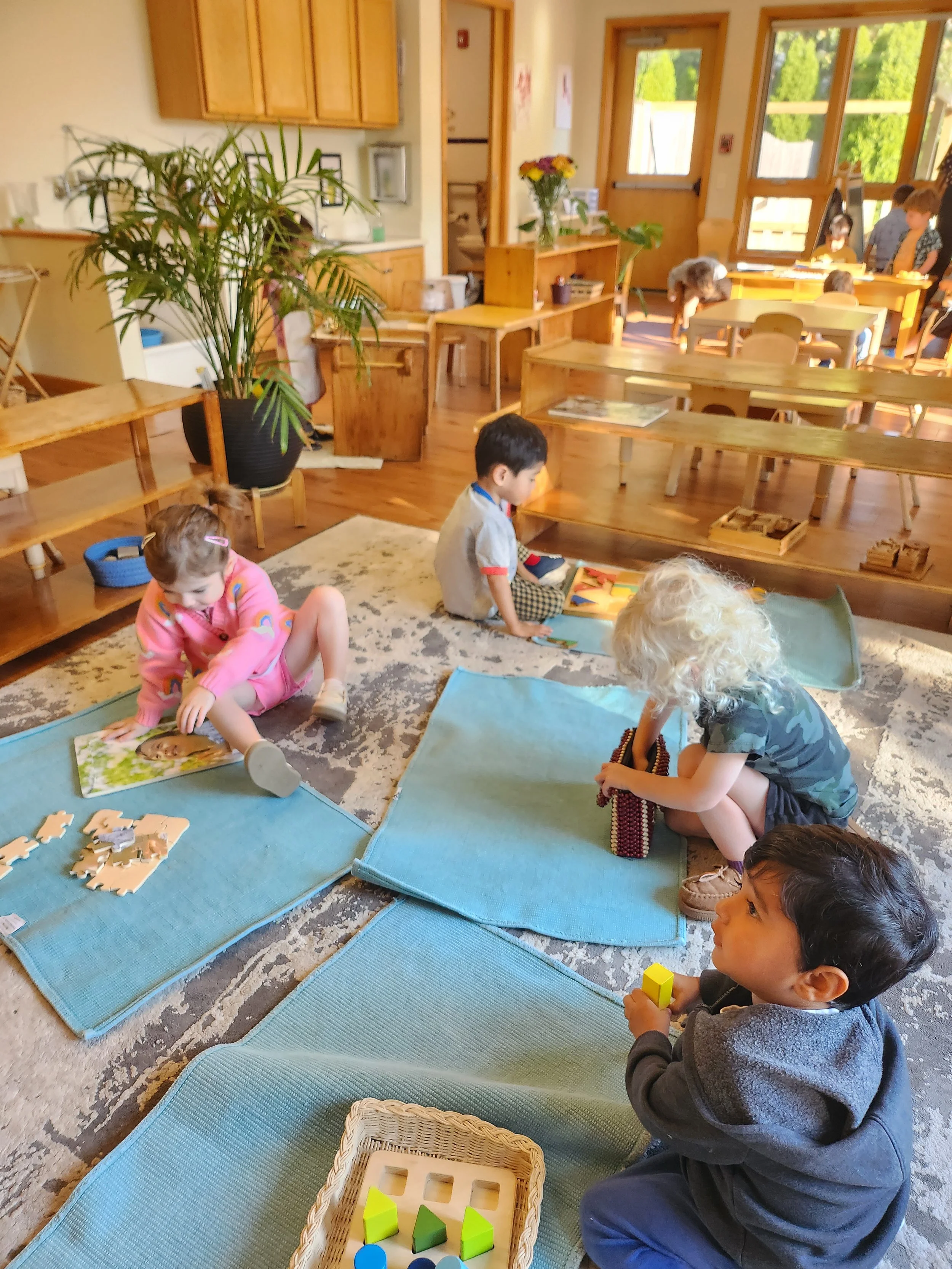
Work Period
Classrooms provide uninterrupted work periods, with a three-hour work cycle as the ideal. All program levels offer a three-hour morning work period, while Elementary students have two-hour work periods, with minimal interruptions. Specialty subjects such as music, art, and world languages are fully integrated into the work cycle, and Montessori music materials and accessible art resources are available to students throughout the day.
-
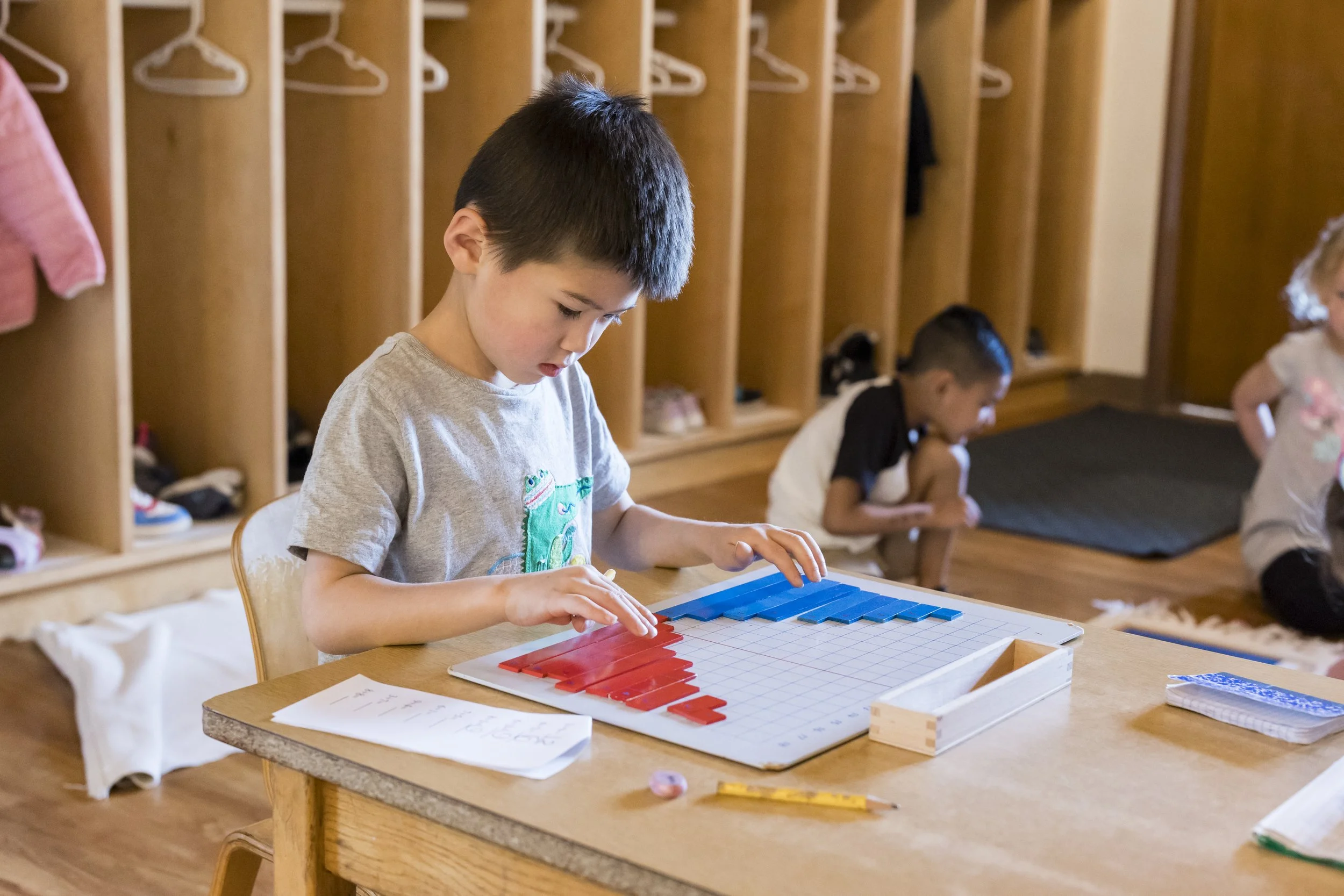
Didactic Materials
Each classroom is fully equipped with a complete set of Montessori materials appropriate to the age group. These comprise the majority of materials available to students. All materials are carefully maintained and thoughtfully displayed to reflect Montessori principles of order, beauty, and simplicity, and are used regularly and purposefully throughout the day.
-
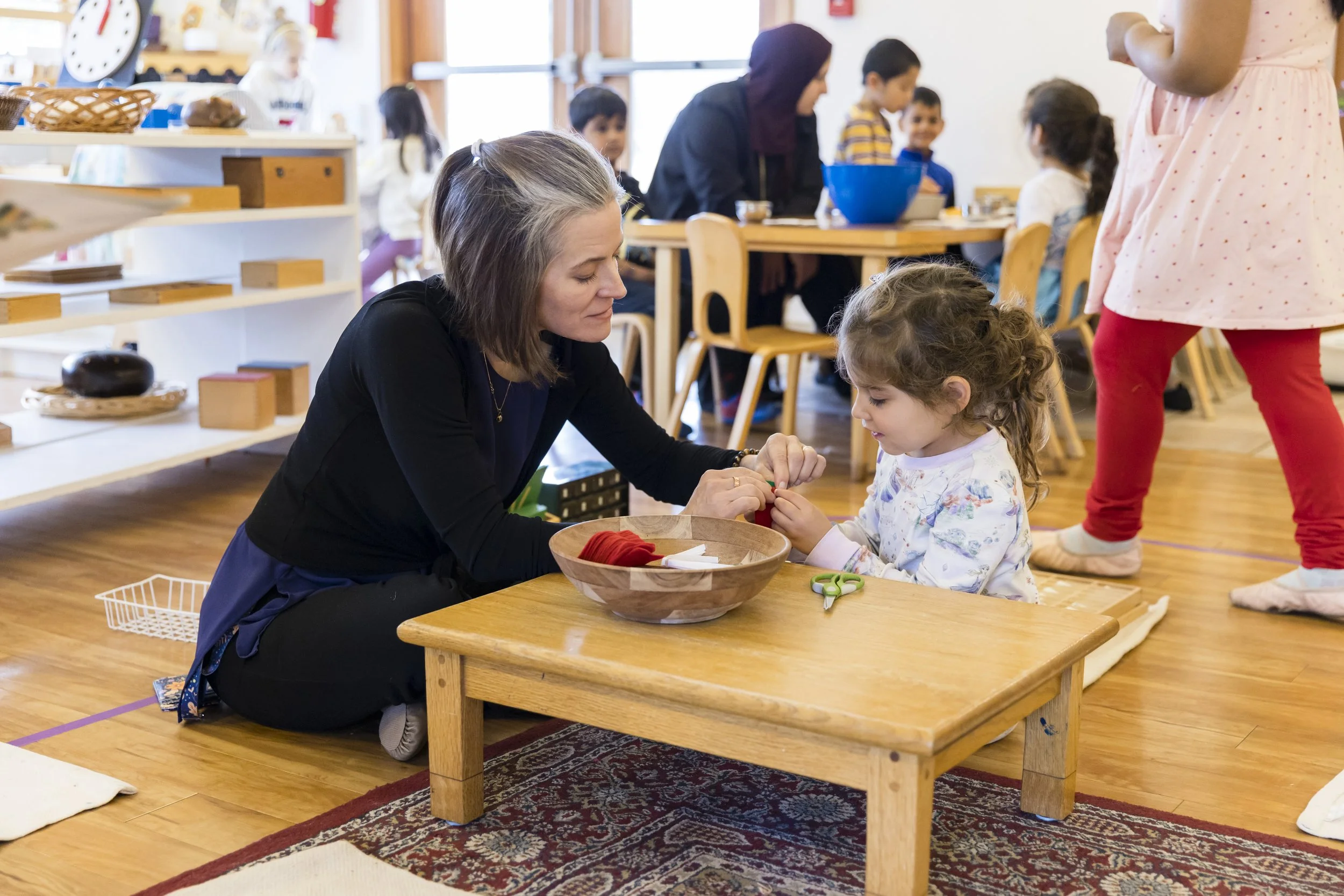
Montessori-Trained Faculty
All classrooms are led by fully credentialed Montessori teachers trained through MACTE, AMS, AMI, NCME, or equivalent accredited programs for the age level they teach. Teachers and staff participate in ongoing Montessori professional development, and support staff are oriented or trained in Montessori practices. Montessori principles are consistently modeled by all adults through respectful communication, intentional guidance, and support for meaningful, independent student work.
-
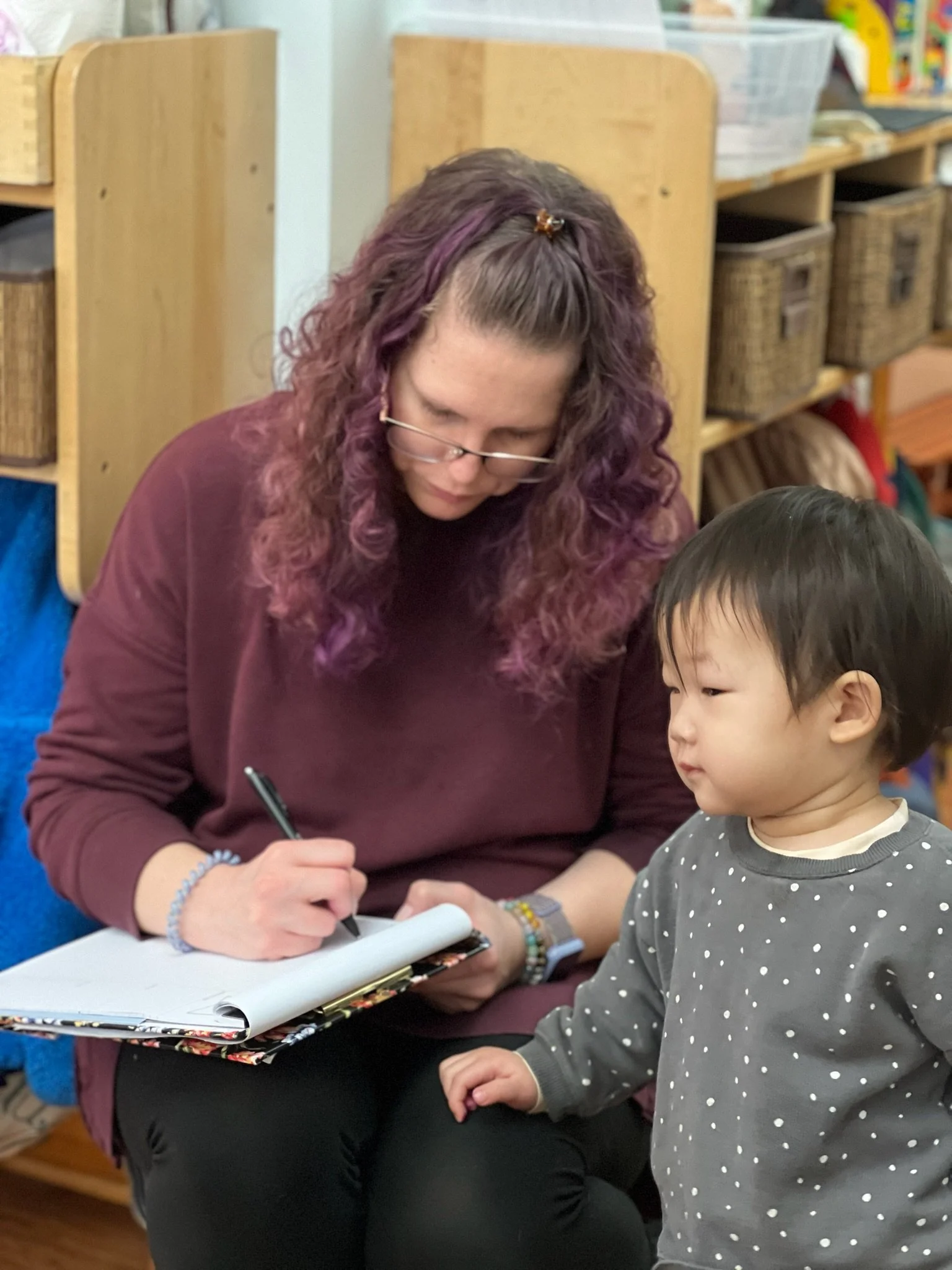
Assessment
Student progress is assessed through daily teacher observations and detailed record-keeping. Assessment integrates academic achievement with executive functions such as self-regulation, initiative, and cognitive flexibility. Teachers document observations, maintain a systematic record-keeping system, and collaborate weekly to review student progress, reflect on challenges, and plan next steps.
-
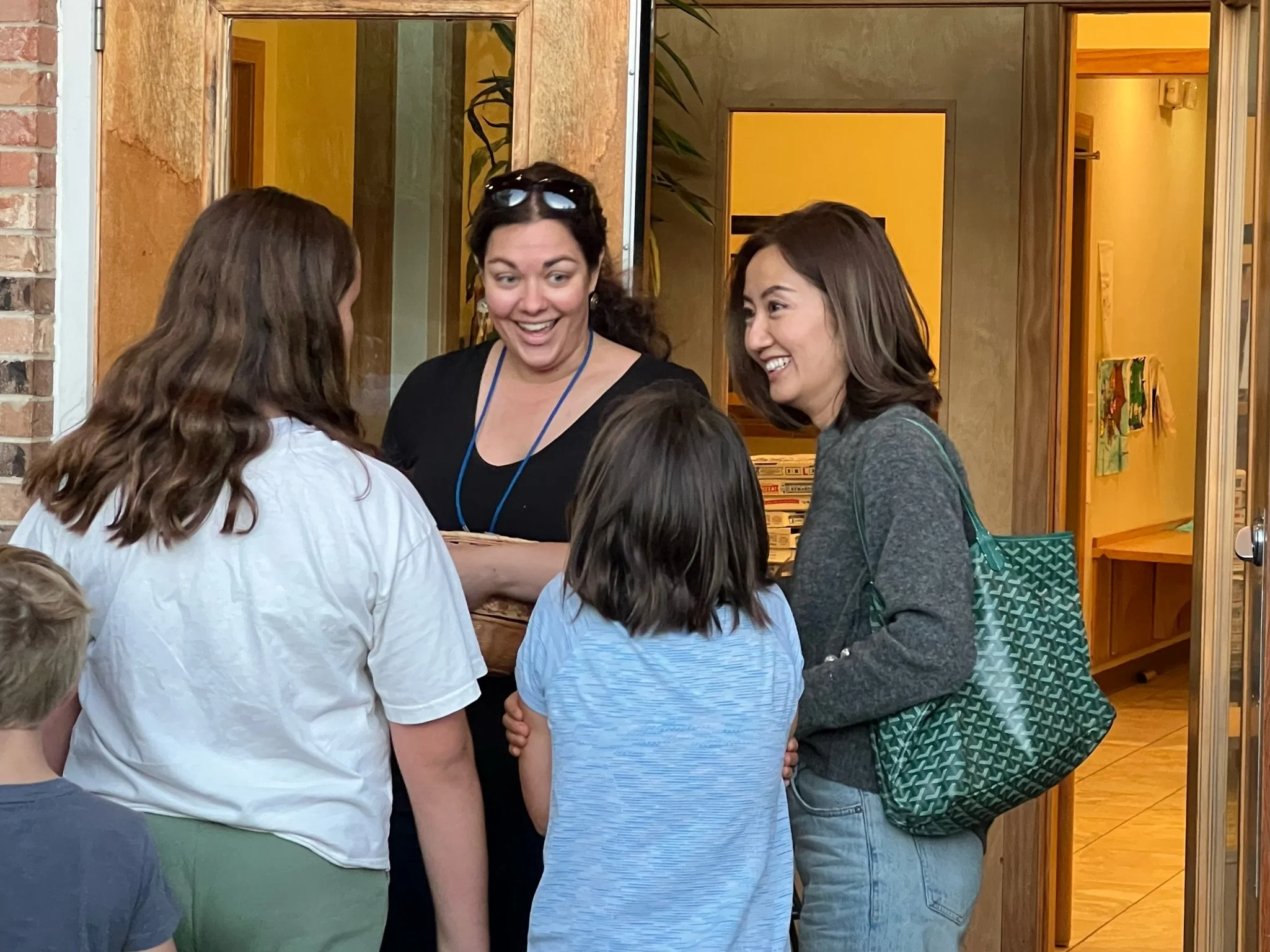
School–Home Partnership
The school fosters a strong, collaborative partnership between home and school through clear communication and meaningful family engagement. Ongoing opportunities for parent education, classroom observations, conferences, and active involvement support shared understanding and connection to the school’s mission.
-
Professional Affiliations
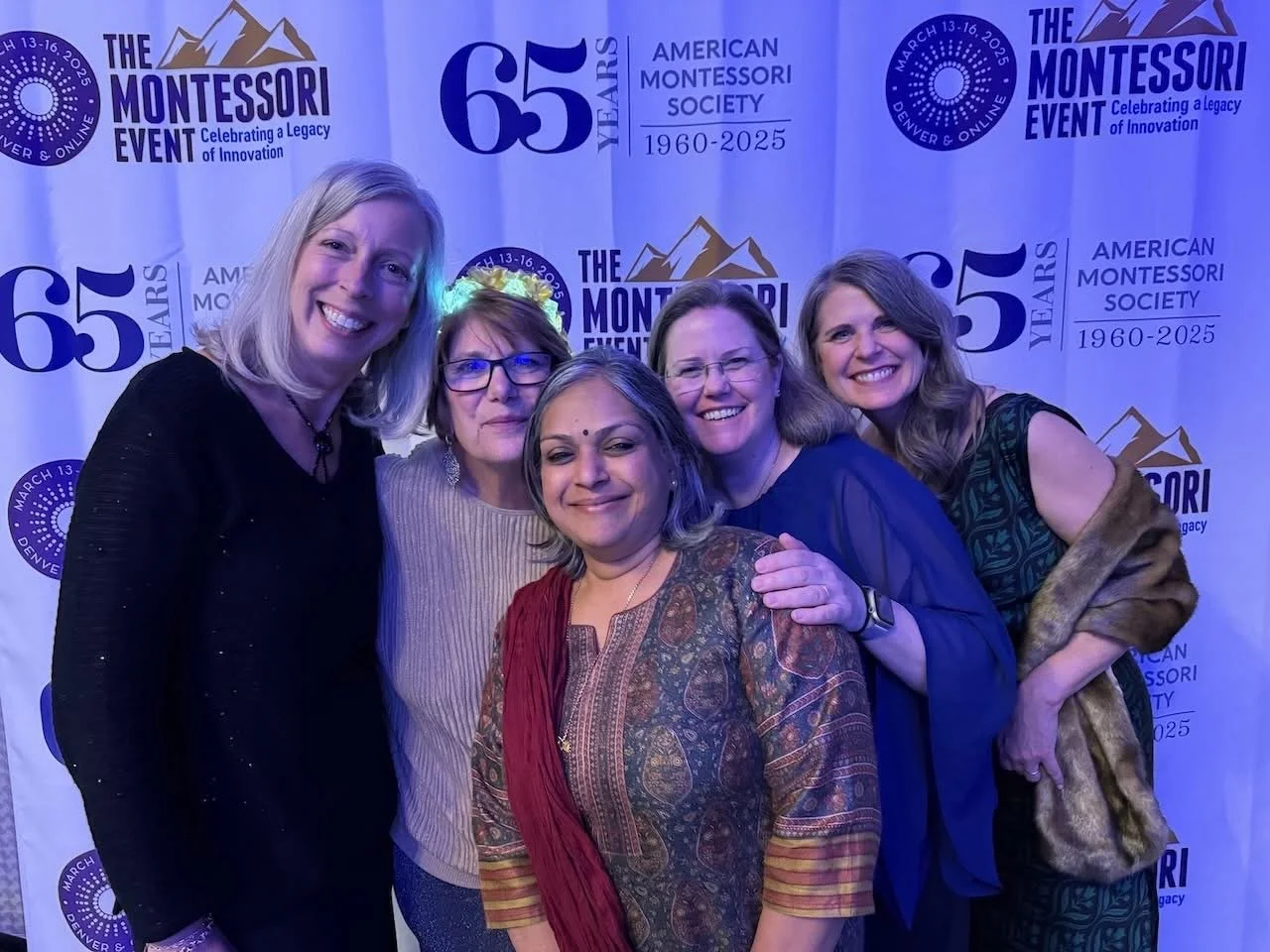
The school demonstrates membership and active affiliation with respected Montessori and educational organizations, including AMS, AMI, and local or state associations such as the Association of Illinois Montessori Schools. These memberships reflect the school’s commitment to continuous improvement, adherence to Montessori standards, and engagement with the broader Montessori and educational community.
What History Shows: Notable Montessori Connections
-
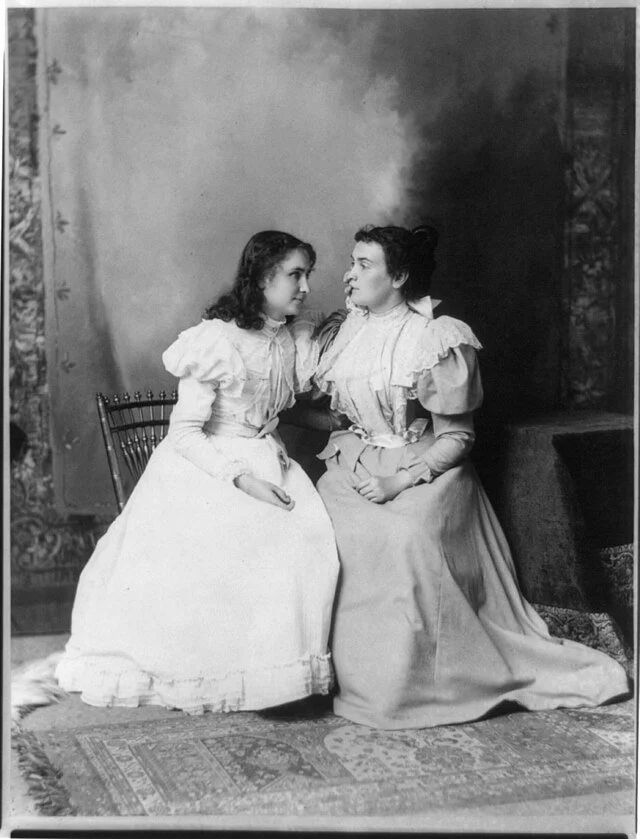
Helen Keller & Anne Sullivan
Admirers of Maria Montessori whose work reflected her core philosophy
-
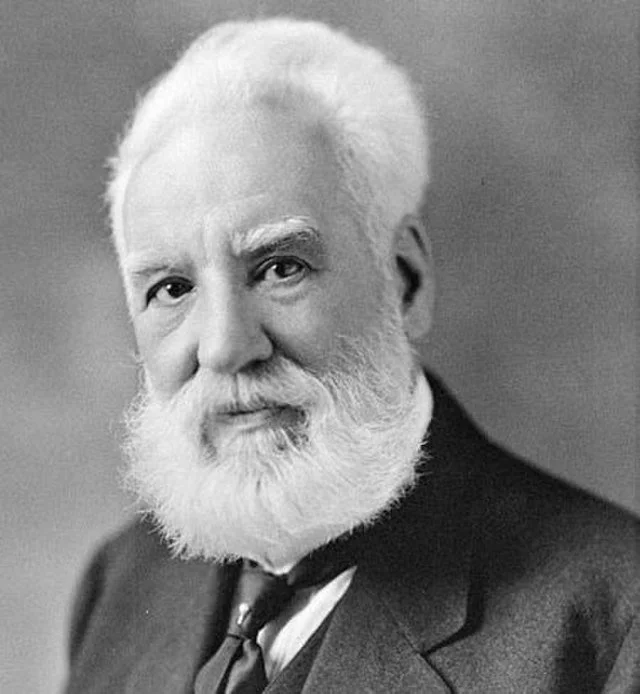
Alexander Graham Bell
Sponsored one of the earliest Montessori schools in America, established in their home in Washington, D.C.
-

Larry Page & Sergey Brin
Google founders that attended Montessori schools
-
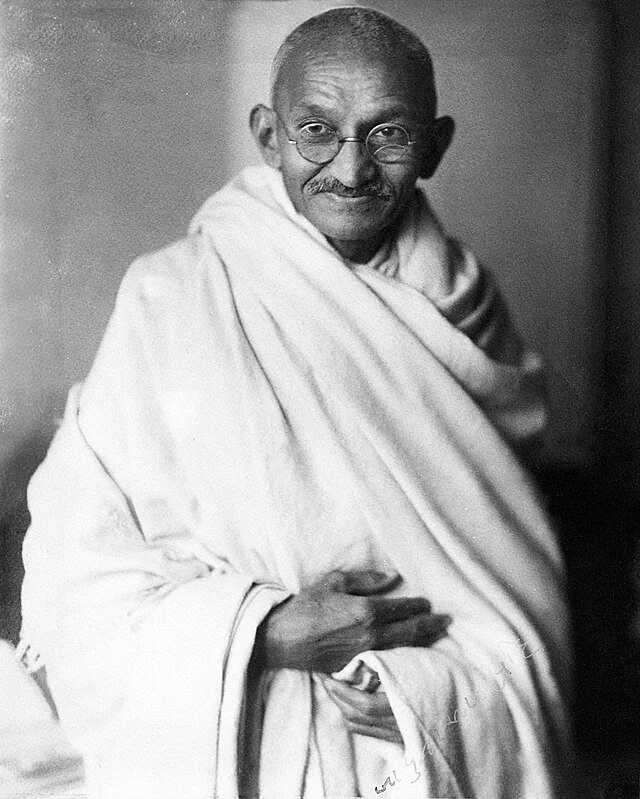
Mahatma Gandhi
Colleagues and allies in peace
-
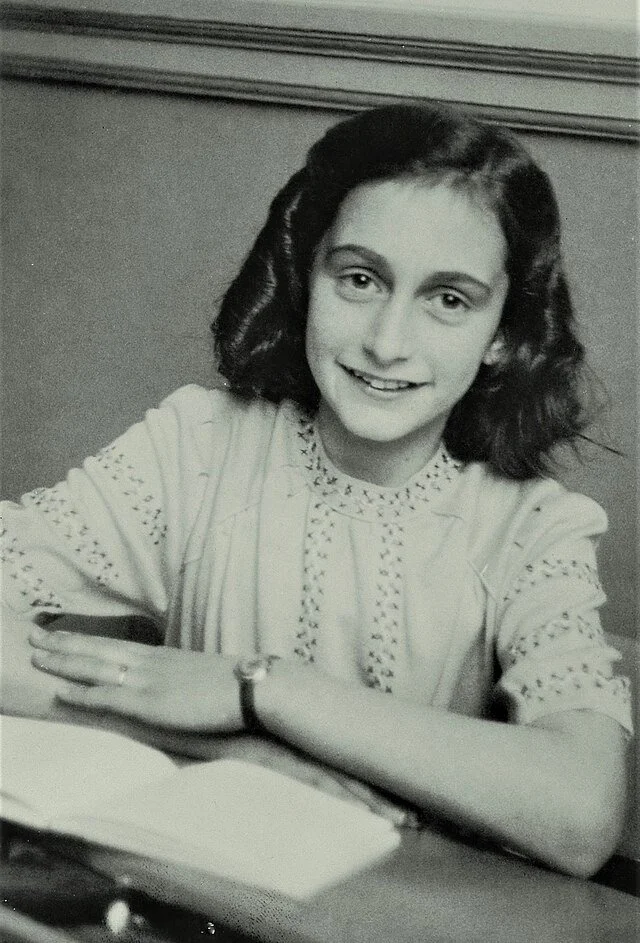
Anne Frank
Attended a Montessori School
-
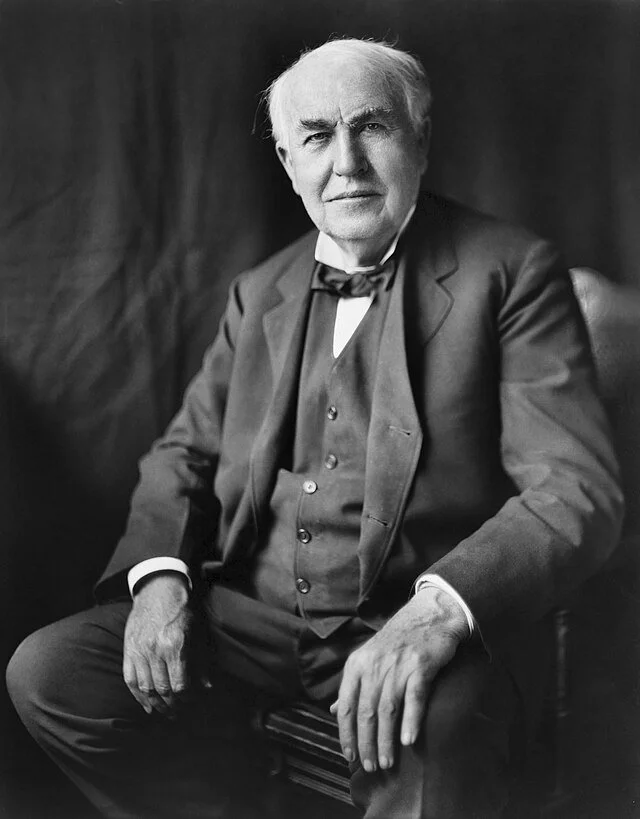
Thomas Edison
An admirer of Maria Montessori
-

Stephen Curry
Attended a Montessori School
-

Jeff Bezos
Bezos Academy is building Montessori-inspired preschools in under-resourced communities
-
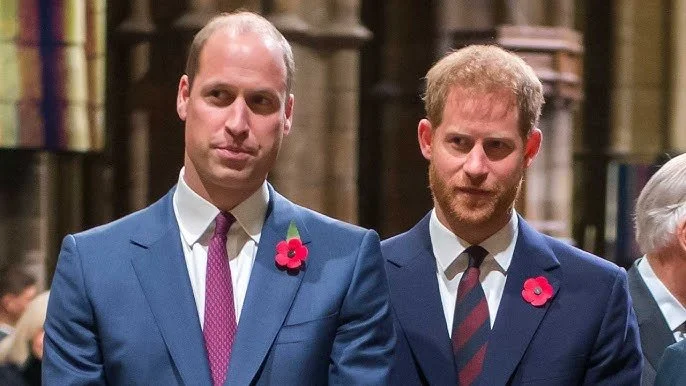
Members of the British Royal Family
Attended a Montessori School
More to Explore:
-
-
American Montessori Society’s (AMS) Montessori Research Library
AMS Fast Facts: Montessori Research
University of Connecticut Library: The American Montessori Society Records
Montessori Public Policy Initiative
Research-Based Montessori Evidence + Outcomes
Journal of Montessori Research
Association Montesori Internationale (AMI) Resource Library
AMI Research Library
Montessori Education Special Interest Group -
Preschool children's development in classic Montessori, supplemented Montessori, and conventional programs
Montessori education's impact on academic and nonacademic outcomes: A systematic review
Plain Language Summary of the above
Annotated Bibliography of the aboveA 3-year study of self-regulation in Montessori and non-Montessori classrooms
The early years: Evaluating Montessori education
Academic Achievement Outcomes: A Comparison of Montessori and Non-Montessori Public Elementary School Students
Montessori Public Policy Initiative Literature Review